

Why Does My High Pressure Grease Coupler Keep Leaking and How Can I Fix It
2026-07-10
If you work with heavy equipment, agricultural machinery, or industrial lubrication systems, you have likely asked yourself: Why does my High Pressure Grease Coupler keep leaking? A leaking coupler is not just messy—it wastes expensive grease, attracts contaminants, and leads to premature bearing failure. The good news is that most leaks are preventable and repairable. In this guide, we break down the root causes, step‑by‑step fixes, and long‑term solutions—with reliable products from Sakura Snow that keep your operation clean and efficient.
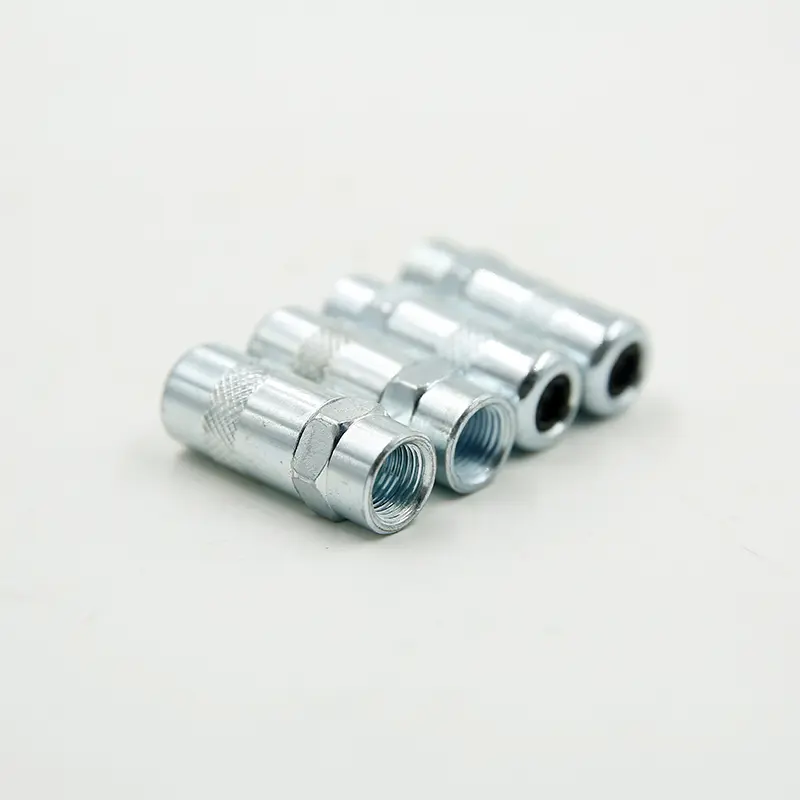
Common Causes of Leakage in a High Pressure Grease Coupler
| Cause | Why It Happens | Typical Symptoms |
|---|---|---|
| Worn or damaged seal | Repeated connect/disconnect cycles degrade the internal rubber or polyurethane seal | Grease seeps out from the coupler collar, even when fully engaged |
| Incorrect coupler size | Using a metric coupler on an SAE Zerk fitting (or vice versa) | Loose fit, side‑spraying grease, or inability to lock securely |
| Debris trapped inside | Dirt, metal chips, or dried grease prevent the jaws from closing fully | Intermittent leaking; coupler “spits” grease during engagement |
| Over‑pressurization | Exceeding the coupler’s rated PSI (typically 10,000–15,000 psi) | Sudden blow‑by or burst‑type leakage around the tip |
| Worn jaw teeth | The gripping claws lose their sharp edge and cannot clamp the fitting shoulder | Coupler slips off under pressure, followed by a stream of grease |
How to Fix a Leaking High Pressure Grease Coupler (Step‑by‑Step)
1. Inspect and Clean the Nose Cone
Remove the coupler from the hose. Use a pick tool or compressed air to clear any hardened grease or debris from the internal jaws and seal area. Sakura Snow recommends a dedicated cleaning kit for deep‑cleaning couplers without damaging the rubber components.
2. Verify Fitting Compatibility
Measure your Zerk fitting’s diameter (standard sizes: 6.35 mm for SAE, 6.0 mm for metric). If mismatched, replace either the fitting or the coupler. Sakura Snow offers color‑coded High Pressure Grease Coupler sets that clearly label SAE vs. metric to eliminate guesswork.
3. Replace the Internal Seal and O‑Ring
This is the most common fix. Most quality couplers—including those from Sakura Snow—have replaceable seal kits. Disassemble the coupler head, remove the old seal, install the new one with a thin layer of clean grease, and reassemble tightly.
4. Adjust the Locking Pressure (if adjustable)
Some heavy‑duty couplers feature an external adjustment collar. Turn it clockwise to increase jaw clamping force. This compensates for minor jaw wear without replacing the entire unit.
5. Perform a Leak‑Test Before Full Operation
After any repair, connect the coupler to a clean fitting, pressurize to 80% of your working pressure, and hold for 10 seconds. No weepage = fixed. If leaking persists, the jaw assembly itself may be worn—replace the entire coupler head.
Proactive Maintenance to Prevent Future Leaks
| Maintenance Action | Frequency | Recommended Practice |
|---|---|---|
| Visual inspection of seal and jaws | Daily (before first use) | Look for cracks, flattening, or rust |
| Clean the coupler tip | After every 10 uses | Wipe with a lint‑free cloth and spray with light solvent |
| Lubricate the collar mechanism | Weekly | One drop of light oil on the sliding sleeve |
| Replacement of seal kit | Every 3 months or 500 cycles | Always use OEM‑spec seals (e.g., Sakura Snow genuine parts) |
| Full coupler replacement | Annually or when jaws show visible rounding | Upgrade to hardened‑steel models for abrasive environments |
High Pressure Grease Coupler FAQ – Common Questions Answered
Q: Can I use a standard grease coupler for high‑pressure applications above 10,000 PSI?
A: No. A standard coupler typically maxes out at 6,000–8,000 PSI. Above that, the internal seal extrudes and the jaws lose grip. You must use a certified High Pressure Grease Coupler, such as the Sakura Snow HP series, which is rated to 14,500 PSI and features a dual‑lip sealing system. Using an under‑rated coupler is not only inefficient but also dangerous—pressurized grease can inject through skin, causing serious injury.
Q: How do I know if the leak is from the coupler or from the Zerk fitting itself?
A: Perform a simple isolation test. Disconnect the coupler, clean the Zerk fitting thoroughly, and attach a known‑good coupler from a different hose. If the leak stops, your original coupler is faulty. If grease still seeps around the fitting shoulder, the Zerk ball valve is stuck or the threaded base is loose—replace the fitting (costs under $2) before blaming the coupler. Sakura Snow offers test adapters that let you check coupler integrity in under 30 seconds.
Q: How many times can I rebuild a High Pressure Grease Coupler before it needs full replacement?
A: For a quality coupler with replaceable seals—like Sakura Snow’s rebuildable models—you can expect 3 to 4 successful rebuilds over its lifetime, provided the jaw teeth remain sharp. Each rebuild costs roughly 20% of a new coupler. However, once the hardened jaw inserts show visible wear (measured with a feeler gauge >0.5 mm gap), replacement is mandatory. Trying to rebuild beyond that point will cause chronic leaking and erratic grip, which wastes more grease than a new coupler costs within two months of operation.
Why Choose Sakura Snow for Your High Pressure Grease Coupler Needs
Sakura Snow engineers its High Pressure Grease Coupler line with cold‑forged steel bodies, precision‑ground jaw teeth, and Viton® seals that withstand extreme temperatures (-40°F to 400°F). Every unit is pressure‑tested before packaging, and the brand offers a 2‑year leak‑free warranty—unmatched in the lubrication industry. More importantly, Sakura Snow provides detailed compatibility charts and video guides, helping you select the right coupler for your fleet, whether you operate excavators, presses, or conveyor systems.
Final Checklist – Stop Leaks Today
-
Clean the coupler nose and internal jaws
-
Confirm SAE/metric matching
-
Replace the seal and O‑ring (use Sakura Snow genuine kit)
-
Adjust clamping force if applicable
-
Test under pressure on a clean fitting
-
Schedule routine maintenance every 500 cycles
Contact Us
Persistent leakage from your High Pressure Grease Coupler not only drives up lubrication costs but also risks equipment downtime and safety hazards. If you have tried the fixes above and still face issues—or if you need a custom coupler solution for extreme pressures, odd‑angle fittings, or high‑vibration environments—reach out to our technical support team today. We provide free fitting consultations, sample testing, and bulk discounts for fleet operators. Contact Sakura Snow via the live chat on our website or call our hotline to speak directly with a lubrication engineer. Your time and grease are valuable—let us help you keep every drop where it belongs.