

Conveyor Belt Production Line Factory: How Advanced Automation Transforms Manufacturing Efficiency
2026-11-02
In an industry where every second of downtime bleeds profit, the conveyor belt production line has quietly become a battleground for efficiency. At SFC, advanced automation isn't just a buzzword—it's redefining how factories cut waste, reduce labor bottlenecks, and push output to levels that manual processes can't touch. But what does that shift actually look like on the factory floor? And why are more manufacturers betting on automated lines to stay competitive? This post breaks down the real impact, from raw material handling to final vulcanization.
The Real Bottleneck Was Never the Belt Speed
The obsession with belt speed always struck me as a convenient scapegoat. Everyone wanted to crank it up, assuming that more meters per minute meant more output. But the line kept stalling regardless. Jammed sensors, misaligned rollers, operators forced to improvise workarounds — those were the real constraints. When we finally stopped tweaking the drive frequency and started observing the actual flow, the bottleneck revealed itself in a dozen small places that no dial could fix.
There is a strange comfort in blaming a single number. If the belt is too slow, you adjust it and feel productive. Yet the data showed that even during brief high-speed bursts, throughput barely moved. The real time was lost in transitions — waiting for the previous batch to clear, manual checks that doubled as quality gates, and a feed mechanism that hesitated every few cycles. Speed was never the limiting factor; it was the rhythm around the belt that kept breaking.
Once we accepted that, the changes felt almost anticlimactic. Smoothing the infeed, fixing the sensor spacing, and giving operators clearer signals did more than any motor upgrade ever could. The belt still runs below its rated maximum most days, but the line now moves without those stuttering pauses. And that is the point — chasing a faster belt was just a way to avoid looking at the messy, human, and mechanical realities that actually governed the pace.
Self-Correcting Lines That Learn From Every Cycle
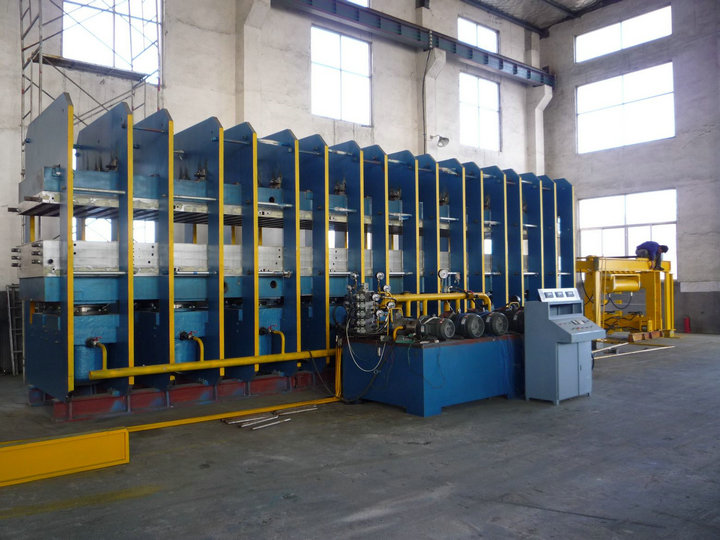
Most production lines only notice a mistake after it has already traveled downstream, forcing costly rework or scrapping. What if the line itself could feel the drift before it becomes a defect? By embedding lightweight feedback loops into each station, the system begins to map its own small deviations—a slightly off torque, a marginal temperature shift—and adjusts parameters on the fly. It is not about perfect sensors but about giving the line a memory that turns every cycle into raw material for the next one.
The trick lies in treating variation as information rather than noise. Instead of waiting for a quality gate to reject a unit, the line compares the current cycle against its accumulated history and nudges its own setpoints back toward the center. Over time, these micro-corrections compound, narrowing the spread and reducing the need for human intervention. You end up with a line that does not just repeat the same motions—it refines them, quietly learning which combinations of speed, force, and timing produce the most stable output.
This kind of self-correction fails when it is bolted on as an afterthought. The genuine gains come from designing each actuator and tool to report its own state, then feeding that stream into a lightweight model that lives inside the control cabinet. No cloud, no dashboards, no buzzwords—just a quiet loop that turns yesterday's near-misses into today's tighter tolerances. That is when a line stops being a sequence of steps and starts behaving like a craftsman who has done the same job ten thousand times and still finds a way to do it better.
Energy Costs Drop When Conveyors Stop Guessing
Most conveyor systems run at full speed regardless of actual material flow, wasting electricity on empty belts and idle motors. When operators stop guessing about load conditions and instead rely on real-time sensors, the system can automatically adjust speed or pause sections that aren't carrying product. That simple shift in control logic is often enough to cut energy bills by double digits.
The problem with traditional setups isn't just the hardware—it's the habit of running everything "just in case." A belt might sit idle for twenty minutes between batches while still drawing power. Smart monitoring removes that guesswork by tracking weight, occupancy, and throughput at each zone. Once the conveyor knows exactly what's moving where, it only spends energy where work is actually happening.
Facilities that adopt demand-based conveyor control rarely go back to fixed-speed operation. The savings show up quickly on monthly invoices, and the reduced runtime also means less wear on belts and motors. Guessing might feel safe because it avoids a line stoppage, but the hidden cost of running blind is always higher than the price of better visibility.
Why Synchronized Robots and Belts Outperform Either Alone
A robot arm picking from a moving belt without proper synchronization tends to either miss the part or stall the line. The belt alone, meanwhile, simply delivers items in a fixed rhythm, ignoring variations in orientation or spacing. Pairing them through real-time encoder feedback changes the game: the robot adjusts its trajectory on the fly, matching the belt’s velocity instead of waiting for it to stop.
That tight coupling eliminates the need for expensive fixtures or vision-guided indexing. Rather than stopping the conveyor for every pick, the robot tracks the part while both are in motion. This cuts cycle time dramatically because the belt never pauses, and the robot spends less time hovering. The result is a smoother flow of work, fewer collisions, and a smaller buffer between stations.
In practice, factories that retrofit older lines with synchronized motion see fewer rejected parts and more consistent throughput. Operators no longer have to babysit start-stop sequences or re-teach positions after belt drift. The system becomes self-correcting — if the belt speeds up slightly, the robot follows. If a part arrives skewed, the gripper compensates. That resilience is something you simply don’t get when either component runs as an island.
The Quiet Shift From Preventive to Predictive Flow
For a long time, preventive maintenance ran on a simple rule: replace or inspect at fixed intervals, whether or not anything was actually wearing down. That worked well enough for basic reliability, but it also created a lot of unnecessary work and occasional surprises when a component failed between scheduled checks. The quiet shift toward predictive flow starts from a different question—not what day the calendar shows, but what the equipment is telling us right now.
Predictive approaches lean on sensor data, historical performance, and small anomalies that often go unnoticed. Instead of swapping a part because 90 days have passed, a team waits for the vibration signature or temperature trend to suggest that a failure is approaching. This changes the rhythm of daily operations: less calendar-driven downtime, fewer spare parts sitting on shelves, and fewer emergency repairs. But it also asks people to trust a recommendation that doesn't come from a manual.
The move is rarely a clean break. Most shops keep some preventive tasks as a safety net while they build confidence in predictive signals. Over months, the balance shifts—scheduled shutdowns become shorter, and condition-based actions take over. What emerges is a smoother flow of work, where maintenance happens when it needs to, not because a tick on a spreadsheet says so. That gradual reordering is easy to miss, but it changes how the whole operation thinks about risk and time.
Reworking Factory Layouts Around Software-Defined Conveyors
Most factories still lay out equipment as if the conveyor path were fixed infrastructure: stamping feeds welding, welding feeds paint, paint feeds assembly, and any reconfiguration means serious downtime. Software-defined conveyors remove that constraint. Instead of long stretches of chain or belt running in one direction, individual powered rollers or small motorized pallets act like addressable nodes on a network. A control system can reroute a pallet from any workstation to any other in seconds, so the physical layout no longer needs to follow a straight line.
That shift allows clusters, grids, or loop-shaped arrangements where off-line stations such as inspection, rework, or custom-build cells can be placed to the side and only receive the units that actually need them. When a product mix changes, you move a few modular stations, update routing rules in software, and start the next batch. The floor begins to behave less like a rigid assembly line and more like a reconfigurable network of workstations.
FAQ
A basic conveyor just moves items from point A to point B. Advanced automation ties the belt to a control system that can reroute, sort, buffer, and pace materials based on what downstream stations actually need, so the line self-adjusts instead of running at a fixed speed.
Throughput usually jumps because the line no longer waits for manual decisions or slow handoffs. Real-time data from weigh scales, barcode readers, and photo eyes lets the system release items only when the next station is ready, which cuts bottlenecks and idle time.
Repetitive material handling tasks improve the most: loading, unloading, sorting, accumulating, and rejecting defective items. These are exactly the jobs where human fatigue causes errors, so letting the conveyor and its integrated robotics handle them keeps quality steadier over a long shift.
Sensors act as the line's nervous system. They track position, weight, speed, and even product orientation, then feed that data to a PLC or edge controller. Based on those inputs, the system can stop a belt, change direction, or flag a part without any operator stepping in.
Smaller factories can benefit, but the payback math is different. A modular automated conveyor system can start with one or two zones, like an automatic gapping area or a divert station, and scale up later. The key is choosing upgrades that remove a specific bottleneck rather than trying to automate everything at once.
Conveyor motors, belts, and bearings get equipped with vibration or temperature sensors. Software learns normal patterns and alerts technicians before a failure causes downtime. That way a worn bearing gets replaced during a scheduled stop instead of in the middle of a production rush.
Besides the equipment price, you have integration labor, controls programming, safety certification, and sometimes weeks of fine-tuning. Many plants also underestimate the cost of training operators and maintenance staff to understand the new system, which can delay the expected efficiency gains.
Workers shift from moving and inspecting parts to monitoring dashboards, handling exceptions, and performing precision tasks that robots still struggle with. Their value moves upstream: reading data trends, adjusting parameters, and troubleshooting the automation rather than repeating the same manual motion every cycle.
Conclusion
The enduring myth in conveyor-based production has been that raising belt speed is the fastest way to boost output. In practice, the real bottleneck sits in coordination failures, unexpected stops, and energy wasted on constant full-power operation. Advanced automation flips that logic. Conveyor lines now self-correct by learning from every cycle, comparing sensor data against past runs and adjusting acceleration, spacing, and merge timing automatically. This cycle-by-cycle adaptation prevents the tiny misalignments that once snowballed into jams. At the same time, smart power management ends the era of guesswork: drives ramp down during light loads and recover energy during braking, so overall electricity consumption drops without any loss in line speed.
Equally important is the growing synchronization between robots and belts. Rather than treating them as isolated assets, factories now coordinate robotic arms, vision systems, and conveyor segments as a single closed loop. The line can speed up or slow down a specific section to match robot pick rates, eliminating the stop-and-go rhythm that wastes cycle time. Maintenance follows the same philosophy: the shift from preventive checklists to predictive flow means sensors continuously watch belt tension, bearing temperatures, and motor currents, flagging only the components that actually need attention. This reduces both unplanned downtime and unnecessary part replacements. On the plant floor, software-defined conveyors are redrawing layouts. Operators can reroute products, create bypass lanes, or isolate a faulty section through configuration changes rather than physical rewiring. The result is a production line that behaves less like fixed machinery and more like a responsive, evolving system.
Contact Us
Contact Person: Chen Zhengwei
Email: [email protected]
Tel/WhatsApp: +86-13963975727
Website: https://www.sfcrubbermachine.com